Secondary structure
RNAcentral generates secondary structure (2D) diagrams using the R2DT software that visualises RNA structure using standard layouts or templates. Learn more about the method in the R2DT paper or check out the code on GitHub.
R2DT overview
RNAcentral stores RNA secondary structures computed using R2DT for millions of non-coding RNAs. The structures are displayed using a library of ~4,000 templates, including:
Small subunit (SSU) rRNA and 5S rRNA templates from the Comparative RNA Website (CRW);
Small and large subunit (LSU) rRNA templates from RiboVision;
Isotype-specific tRNA templates from GtRNAdb;
RNase P templates from the RNase P database;
Rfam consensus secondary structures for all other RNA types.
For each sequence the R2DT pipeline automatically selects the template using ribovore, folds the sequence into the template structure using Infernal, and visualises it using Traveler.
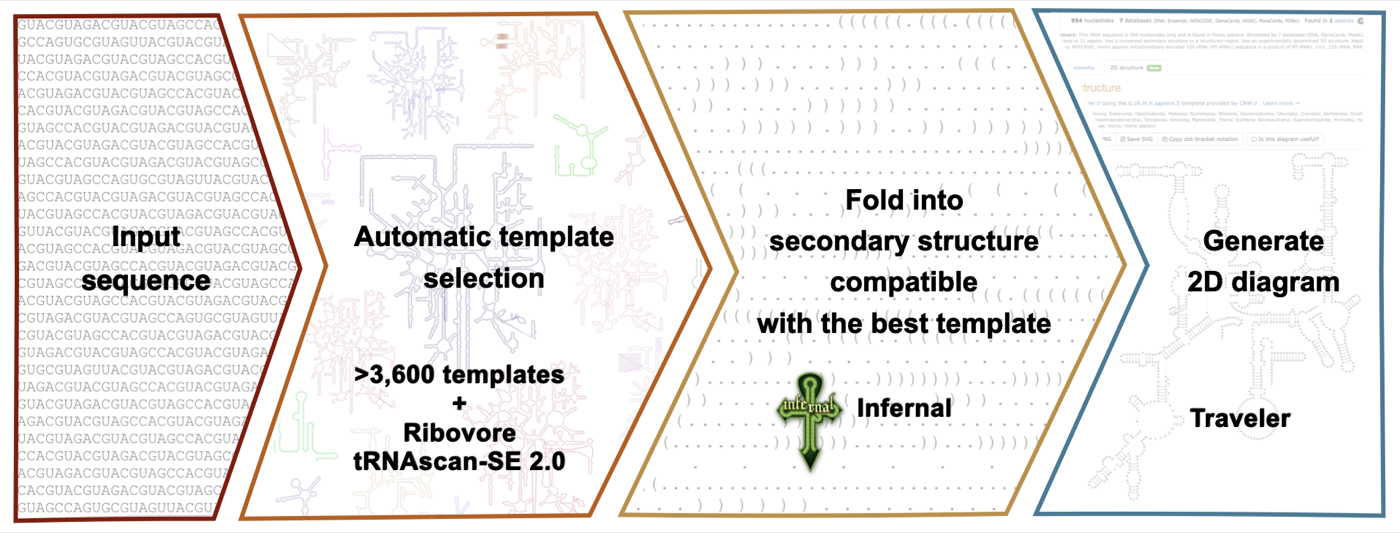
RNA secondary structure in RNAcentral
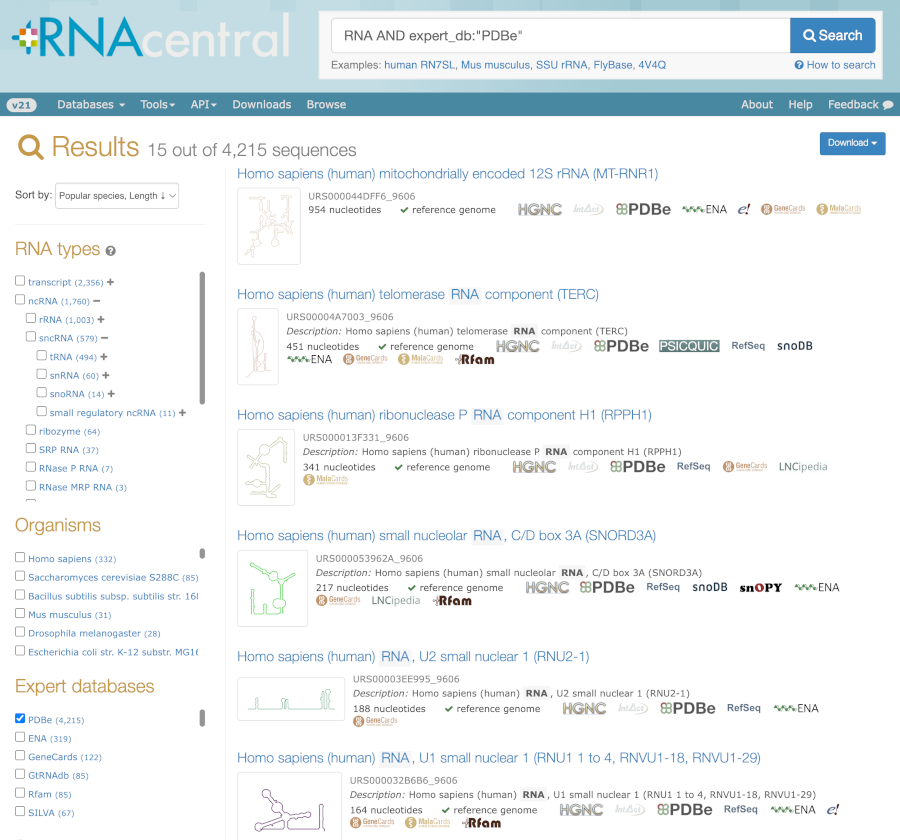
The secondary structures are displayed in text search results, on RNA sequence pages, and in sequence similarity search results. For example, text search results include simplified outlines of the structures:
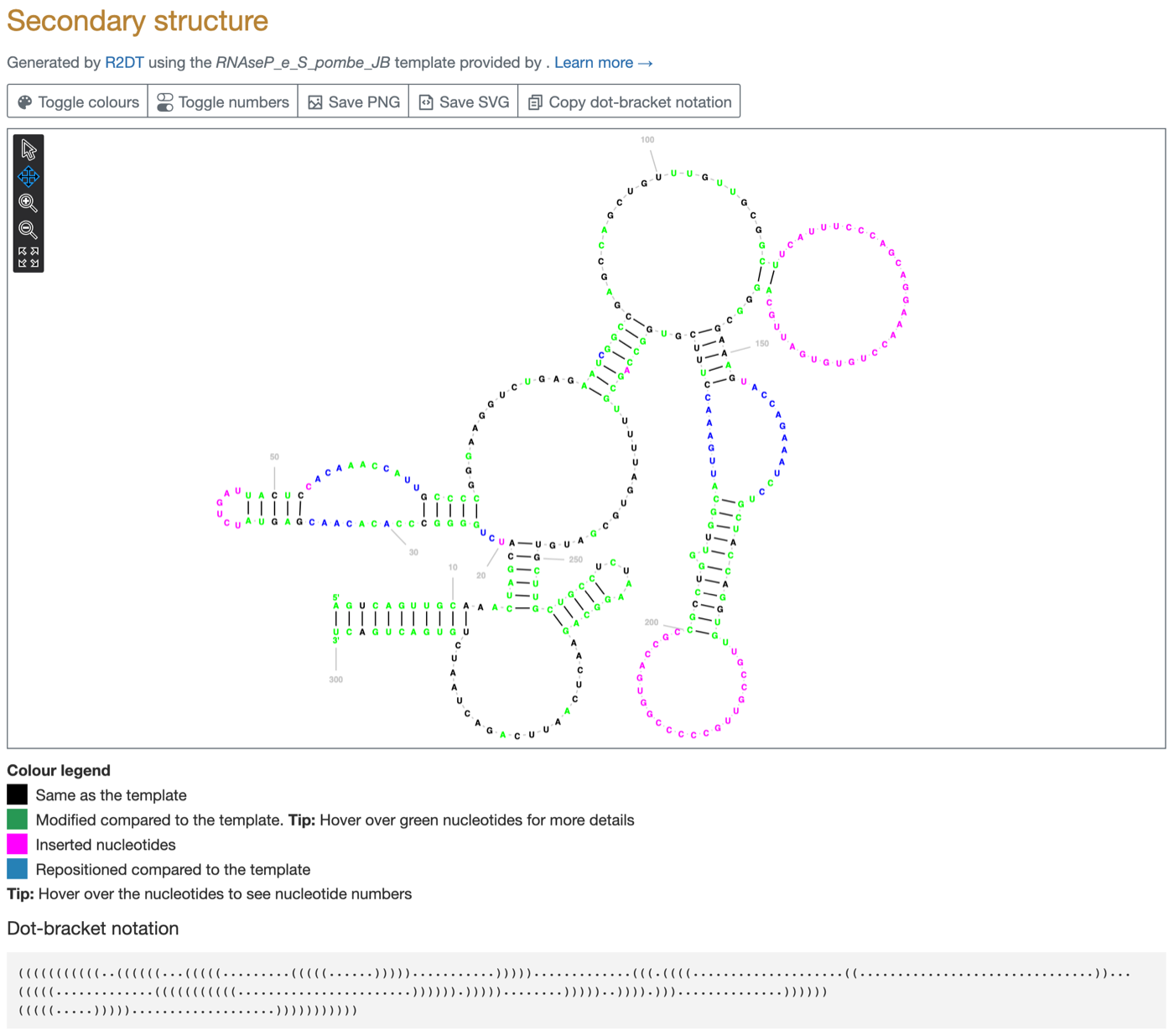
Clicking on any thumbnail shows a detailed diagram, such as the following fly RNase P structure:
What do colours mean?
The differences between the template and the sequence are highlighted in colour. The nucleotides shown in black are identical to the template while the nucleotides that differ from the template are shown in several colours depending on whether it’s an insertion (magenta) or modification (green).
Running R2DT yourself
To draw the secondary structure of your own sequences, use the R2DT web application. R2DT can also be run through an API or on the command line. See R2DT under Tools.